
The sRedList Working Group
The Red List of Threatened Species (Red List) of the International Union for Conservation of Nature (IUCN) plays a crucial role in biodiversity conservation, by monitoring biodiversity status, guiding policies, and monitoring effectiveness of conservation actions. However, years of insufficient resourcing has challenged assessors’ ability to expand the number of species included in the Red List, as well as updating old assessments and making assessments more robust and standard. Modelling methods have been developed by researchers for two decades with the goal to support, fast-track, and standardise Red List assessments, but their uptake in the Red List has been very limited.
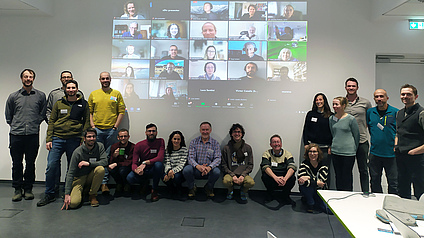
A working group – sRedList, coordinated by Luca Santini and Moreno Di Marco and granted with a postdoc position occupied by Victor Cazalis – has been created by bringing together Red List practitioners and ecological modellers with the goal to address these challenges. It was funded by sDiv – the synthesis centre for biodiversity sciences of iDiv – between 2021 and 2023, enabling 3 group meetings.
Our objectives
1
The first objective of the working group was to synthesise the published modelling approaches to predict Red List categories. This led to a review where we described and compared the goals and approaches of 98 studies (Cazalis et al. 2022, TREE) and analyzed how the communication gap between academics and the Red List community led to very little uptake of these studies in the Red List. We suggested ways forwards in terms of research and application, especially the creation of user-friendly tools to make best methods accessible to Red List assessors.
2
The second objective was to fill scientific gaps that we identified in our review, which led to five analytical papers:
- Henry et al. (2024): Modelling the probability of meeting IUCN Red List criteria to support reassessments, Global Change Biology
- Mancini et al. (2023): A standard approach for including climate change responses in IUCN Red List assessments, Conservation Biology
- Mancini et al. (2024): Generation length of the world’s amphibians and reptiles, BioRXiv
- Lucas et al. (2024): Using comparative extinction risk analysis to prioritize the IUCN Red List, Conservation Biology
- Cazalis et al. (2023): Prioritizing the reassessment of data deficient species on the IUCN Red List, Conservation Biology
3
The third objective was to effectively bridge the gap between academics and the Red List community by developing an online platform where Red List assessors could easily apply relevant analyses. The overall philosophy of the platform is to provide easy-access to complex analyses, but offering many interactive options to assessors to best meet their specific needs. This platform was developed in close collaboration with LifeWatch Italy who developed the online infrastructure and hosts the platform on their servers, and the analyses are being developed and maintained by Victor Cazalis. It is presented in detail in (Cazalis et al., 2024) published in Biological Conservation.